Match Official Communications Technician
End Client: World Rugby | Technical Provider: VME
Match officials comms is a different world to touring, but the RF principles are exactly the same. Where a festival gives you hours of preparation and a crew around you, sport gives you a slot, a pitch, and 90 minutes where something going wrong is visible to everyone in the stadium and everyone watching at home. The margin for error isn't small — it's zero.
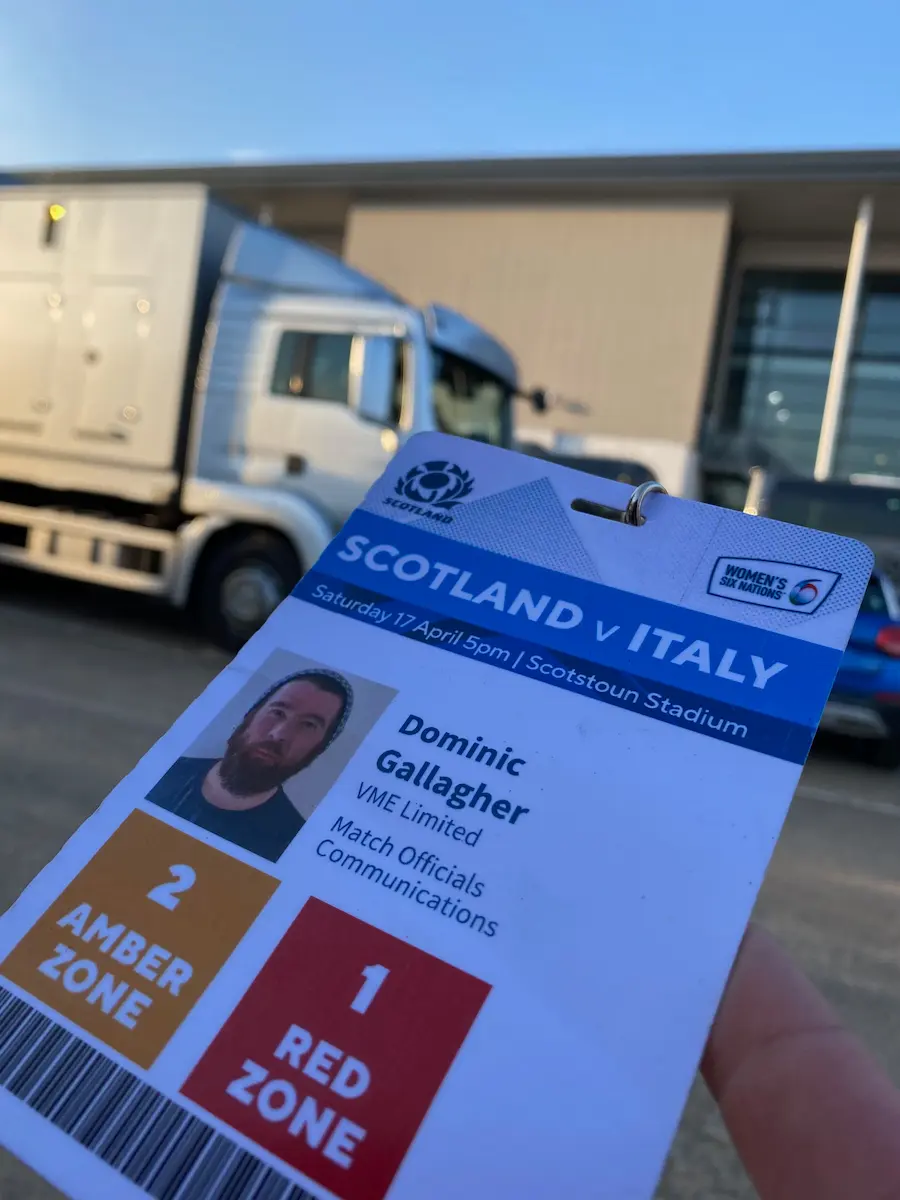
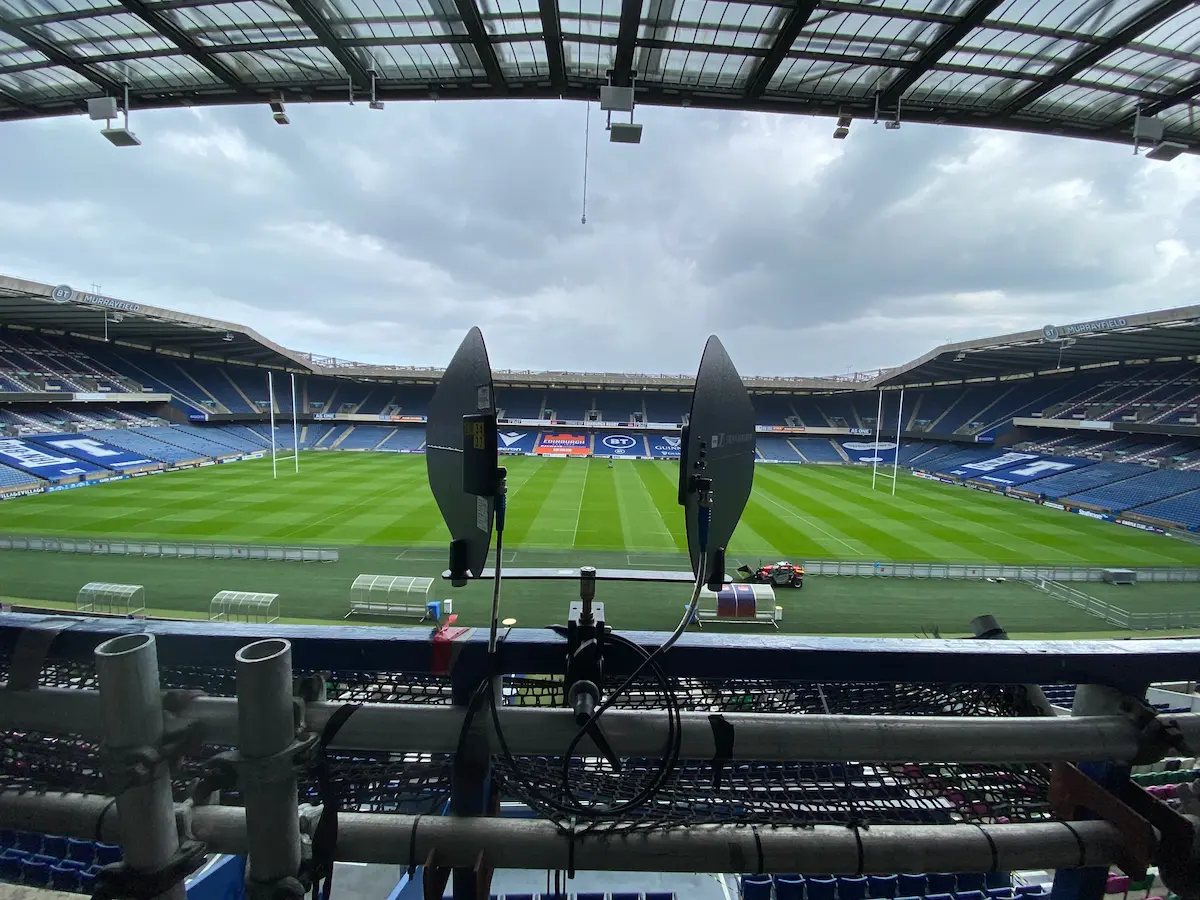
The role covers the complete match official team: referee, two assistant referees, 4th and 5th officials, interfacing with broadcast for the TMO feed back and forth, the timekeeper (Inc datafeed for graphics) and the occasional representative from World Rugby. Most of them are fitted with wireless Sennheiser systems before kick-off, checked, tested, and monitored pitchside for the full match making any on-the-fly changes via wireless control of the digital mixer.
Depending on what stadium you're in will dictate what equipment you run, a combination of Sennheiser Digital 6000 and Sennheiser 2000 Series are used by VME — digital where the environment demands it, analogue where it earns its place. For the 2000 Series setups, Sennheiser SK 5212 beltpacks are the go-to: compact, discreet, and robust enough to handle a full match on an officiating team that doesn't stand still. Mixing runs through a rack-mount Allen & Heath — a workhorse unit that's been part of the kit long enough to have earned its place many times over.
RF licensing and spectrum planning are built into the workflow from the start, not bolted on as an afterthought. Operating under a well co-ordinated set of frequencies for resilient and licensed by Ofcom licensing across each venue nationwide, every deployment is backed by up-to-date spectrum scans and live intelligence from a tight team of VME technicians who know the broadcast landscape at these grounds inside out. That network matters. The difference between a clean show and a problematic one is often decided before anyone steps onto the pitch — it's all in the planning.
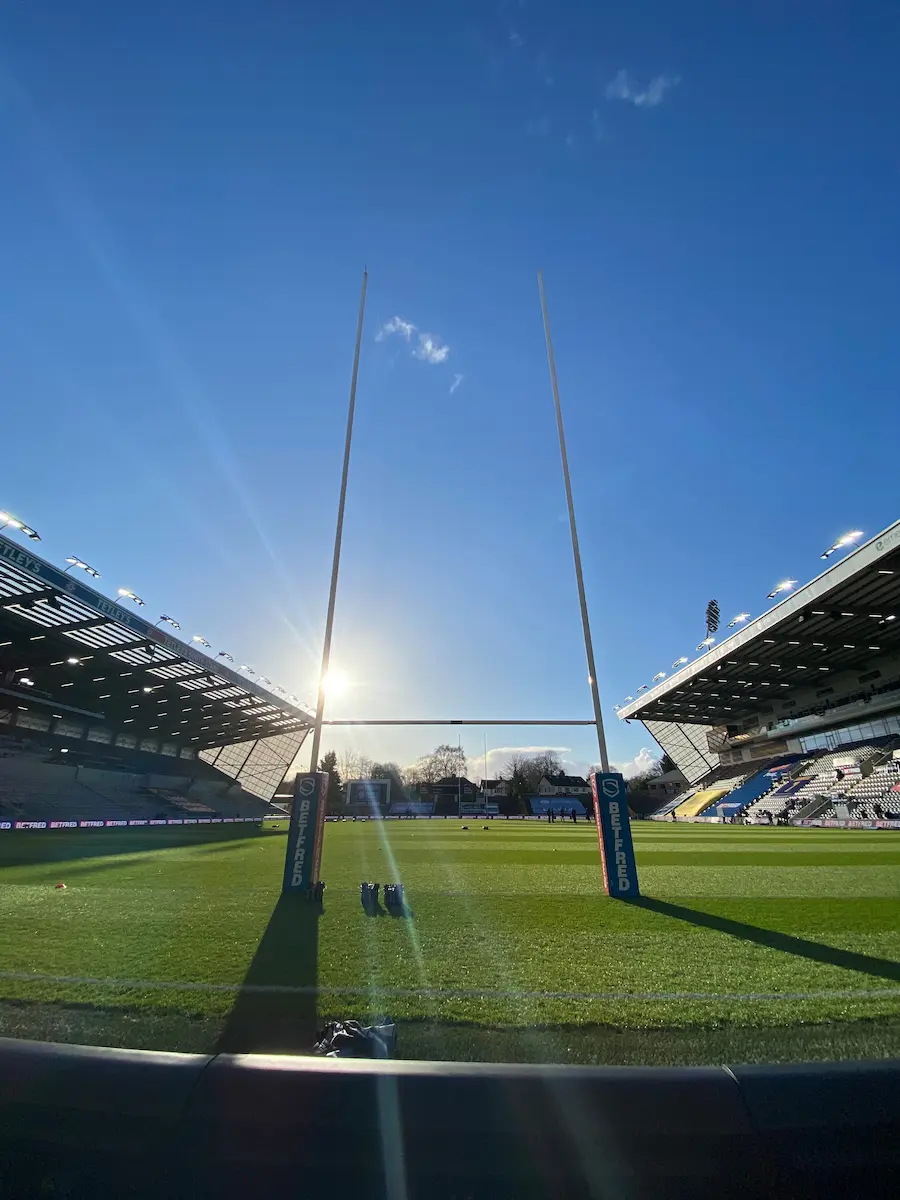
Working across Premiership Rugby grounds and a selection of Super League fixtures, the broadcast environment is always pleasant and a nice day out, providing it's not cold and raining. Close communication with the broadcast truck is essential, ensuring I’m getting what I need and they're getting what they need. What sport gives you that touring doesn't is some continuity. You tend to work with the same officials across a season, sometimes across several seasons. You learn how they move, what timings they work to for checks, how they like the earpiece fit and what side they like their push-to-talk buttons (with the exception of the ref, they're always live). Knowing this, I find builds a trust between you and the officials.
The spectrum management at Premiership grounds is generally well-handled. Big stadiums, experienced broadcast teams, established coordination workflows. The work is clean. What keeps it interesting isn't troubleshooting — it's the discipline of getting everything exactly right within a tight window, every single time, with no room to revisit it once the whistle goes.
It sits well alongside touring. Different pace, different environment, different pressures. The same standards.